Refurbished PC sales grew 7% across
Europe’s top five markets (Italy, the UK, Germany, Spain, and France)
in Q4 2025. Not all growth is equal, though. Data from the CONTEXT
Weekly IT Industry Forum shows the UK is doing the heavy lifting, with
local volumes doubling as second-life tech moves to the mainstream.
Price Sensitivity
Price is still the main draw for
refurbished tech, but expectations are rising. While saving money is
the priority, shoppers are increasingly trading a lower price point
for better performance.
- The Sweet Spot: Most people spend €200–€300,
accounting for approximately 40% of sales.
-
Mid-Range Growth: More buyers are moving into the €300–€400
range to get faster processors and more memory.
-
Budget Basics: Very cheap options (under €100 for tablets
and under €200 for desktops) remain popular for students and
basic home offices.
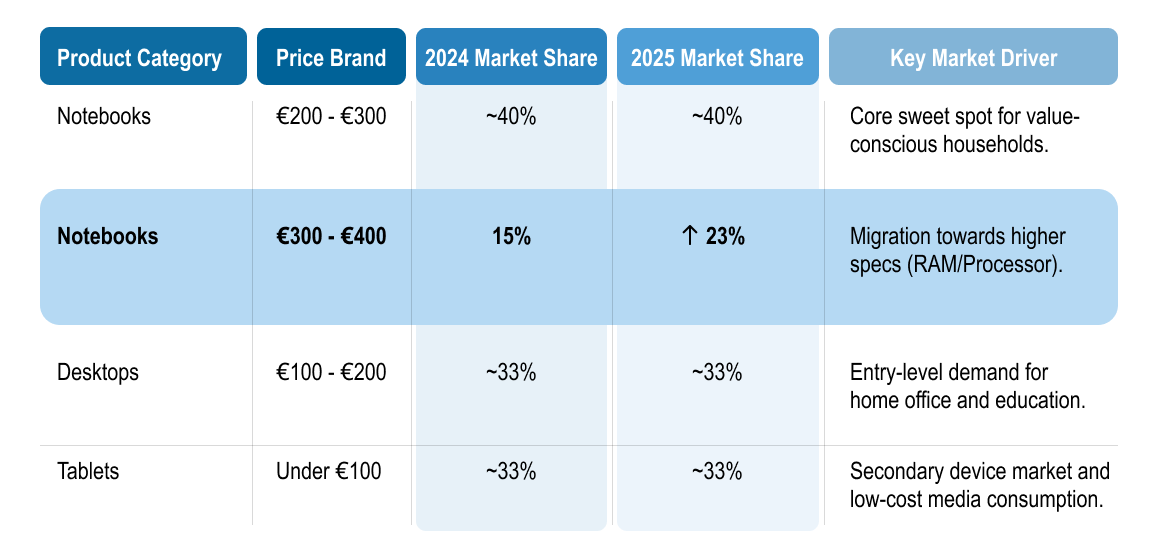
This upward trend suggests buyers
are prioritising performance. They appear willing to invest slightly
more for 'nearly-new' devices to secure better specifications,
rather than accepting the limitations often found in entry-level new hardware.
Quality Concerns in Q1
As the cost of computer parts (like
RAM and storage) rises, some sellers are cutting corners. Some laptops
that should have 16GB of memory are being sold with only 8GB to keep
the price low.
Retailers face a growing risk here.
Hardware quality has to meet 2026 software requirements, or customer
disappointment will follow.
Looking ahead: Right to Repair
The European 'Right to Repair'
directive arrives in July 2026, bringing new rules to the circular
economy. By requiring manufacturers to provide spare parts and repair
guides, the law will make it easier to fix electronics and make
refurbished tech even more reliable.
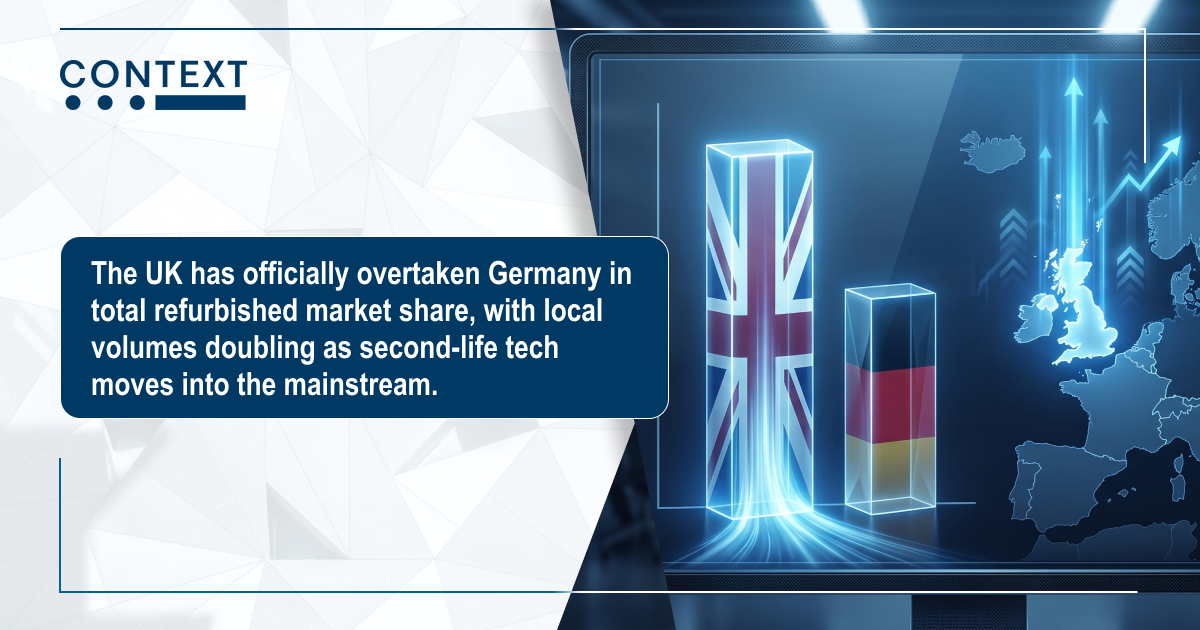
The UK has officially overtaken
Germany in total refurbished market share as consumers increasingly
invest in better quality and performance. To sustain this growth, the
industry must commit to quality parts and honest labelling. Sellers
who thoroughly inspect their incoming stock ensure customers know
exactly what they are buying.
For more data-led
insights into the European retail market, join the join
the Retail Pulse Newsletter .