Retail chains across Europe are still fighting
the same old battle: thin margins, price-sensitive shoppers, and
promotions that eat into profitability. Meanwhile, a segment sitting
right under their noses is quietly walking past them and into the arms
of specialist resellers.
That segment is the SME. Small and medium
enterprises, buying through small and medium resellers, are not
behaving like typical retail consumers. The prevailing view within the
channel is straightforward: these businesses have bigger budgets and
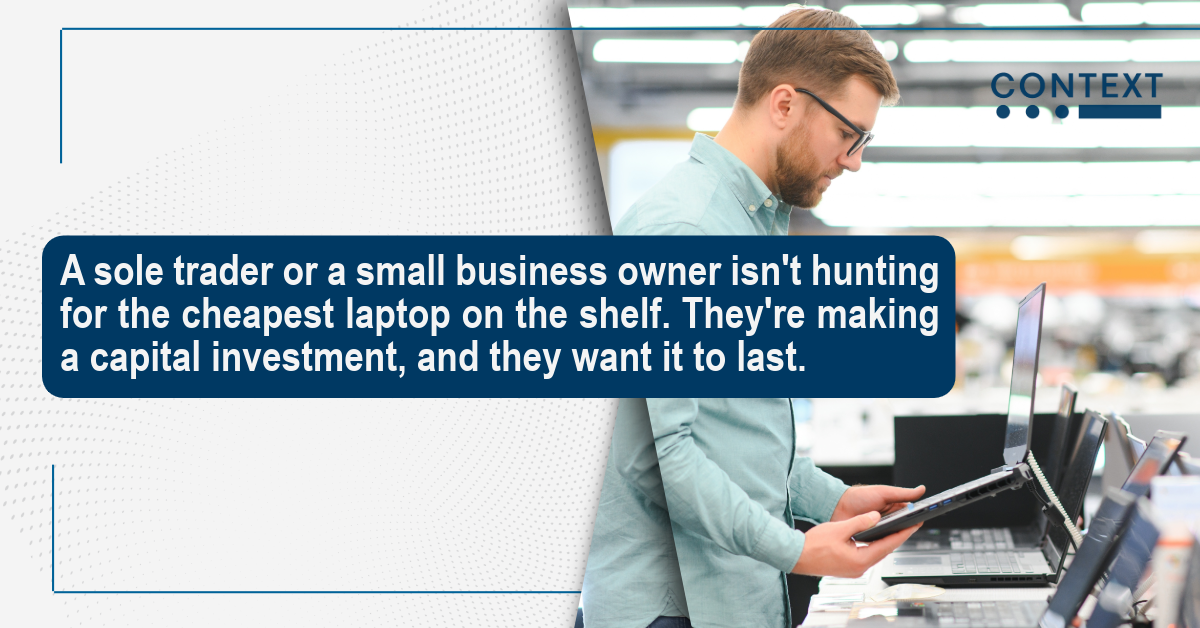
different priorities when it comes to hardware. A sole trader or a
small business owner isn't hunting for the cheapest laptop on the
shelf. They're making a capital investment, and they want it to last.
That means security features, decent processing power, and the kind of
build quality that won't need replacing in eighteen months.
Currys PLC has clocked this. The company has
identified the 1 to 50 seat SME demographic as a serious addressable
market, one worth tens of billions of euros across Europe. It's not
hard to see why. These corporate accounts spend more per transaction,
averaging around £500, and they come back more often than the average
retail customer. Yet traditional retail spaces are still built around
consumer basics. Enterprise-grade configurations and commercial
networking kit are largely absent from the shop floor, which leaves
the door wide open for specialised resellers to walk in and take the
higher-margin business.
The Widening Gap in Average Selling
Prices
The clearest evidence for this shift is in the
numbers. Our pan-European analysis of the first half of 2026 shows a
divergence between channels that has become too large to ignore.
Across five major European markets, the
volume-weighted average notebook ASP in the SMR channel reached €835.
In traditional retail chains, it sat at €663. That's a premium of
nearly 26%, and it tells you something simple: SMEs are, on average,
spending considerably more than the standard consumer on the same
category of device.
James Bates, Senior Retail Analyst at CONTEXT,
put it plainly. Both channels have seen notebook ASPs climb since
the start of the year, but the gap between them is widening, and
it's widening fast. Looking across the major European markets, the
SMR premium over standard retail grew by 17.2 percentage points in
six months alone, from 16.6% in January 2026 to close to 34% by
June. Retailers who assume that micro-businesses want the same
discounts as everyone else are misreading the room, and it's costing
them a genuinely valuable transaction.
What's Happening Country by Country
The pan-European trend is useful, but the real
texture is in the national data. Each market tells a slightly
different story.
Germany shows the sharpest divergence of the
five. German SMRs achieved an average notebook ASP of €1,028 during
2026-H1, against a retail chain average of just €726. That's a 41.5%
premium. By June 2026 the gap had widened further still, with SMR
ASPs reaching €1,160 compared to €776 in retail chains. If there's
one market that should be making retailers nervous, it's this one.
The United Kingdom offers a clear explanation for
why some of the country's largest retailers are now doubling down on
B2B. UK resellers commanded an ASP of €821 in the first half of the
year, beating the retail chain average of €618 by nearly 33%.
France has been steadier but no less telling.
SMRs held a 2026-H1 ASP of €762, a 22% premium over the €626 retail
baseline. Not the most dramatic figure on this list, but consistent,
and consistency counts for something in a market like this.
Italy presents a more modest picture. The 2026-H1
SMR ASP came in at €722 against a retail average of €661, a premium of
9%. Real, but far less pronounced than in Germany or the UK.
Spain shows the smallest gap of the five markets,
though the direction is the same. Spanish SMRs achieved an ASP of €706
against €663 in retail, a premium of 6.5%. Small businesses there are
still willing to spend more, just not by the margins seen further north.
Reclaiming the Value
The scale of the opportunity here is hard to
dismiss. If major retailers want a genuine share of a market worth
tens of billions of euros, corporate accounts and 30-day payment terms
simply won't cut it. That's the bare minimum, not a differentiator.
What's actually required is a rethink of the
store proposition itself. Product ranging needs to account for
professional use cases rather than treating business buyers as an
afterthought to the consumer range. The buying journey needs a more
consultative approach, one that reflects the fact that these
customers are making an investment decision, not a discretionary
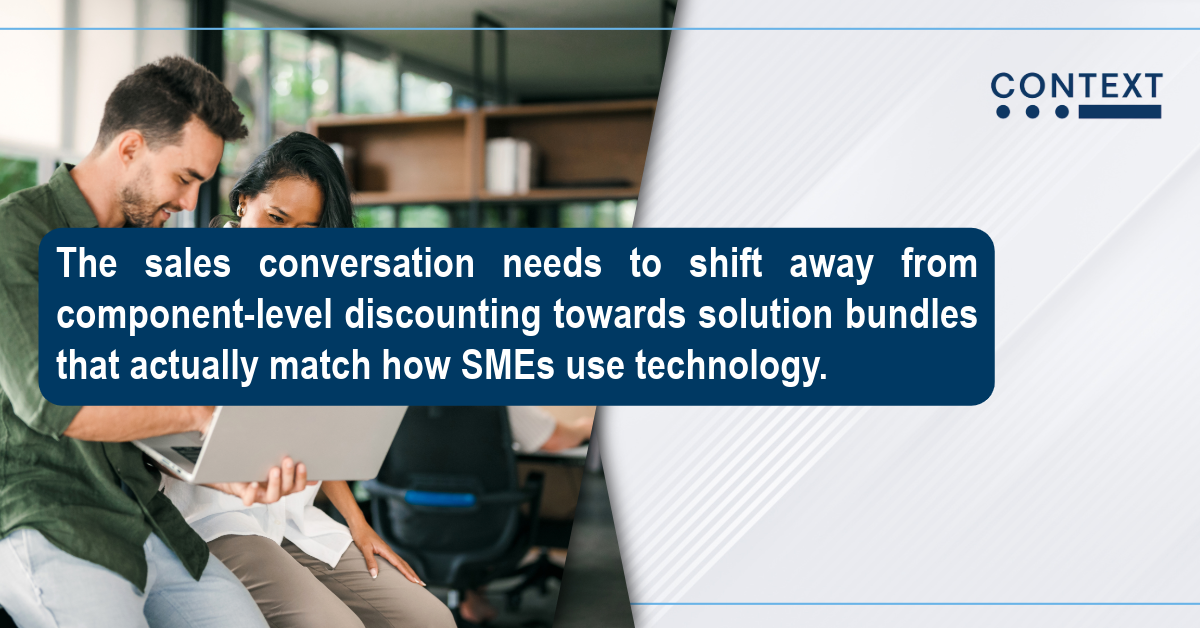
purchase. And the sales conversation needs to shift away from
component-level discounting towards solution bundles that actually
match how SMEs use technology.
The data makes one thing clear: small business
buyers are prepared to pay more for equipment they trust. The only
open question is whether the wider retail sector is willing to build
the proposition that earns that spend, or whether it will keep
watching specialist resellers take the margin instead.
For weekly market updates and analysis, join
our Retail
Pulse Newsletter.